Master Your Money with a Budget Templates Bundle
Let's be honest. The phrase "financial planning" often conjures images of complex spreadsheets, intimidating numbers, and a sense of impending doom. For the busy creative, entrepreneur, or small business owner, it can feel like one more massive, unappealing task on an already overflowing to-do list. But what if managing your money felt less like a chore and more like designing a successful project? That's the core idea behind a thoughtfully crafted Budget Templates Bundle. It’s not just a collection of sheets; it’s a strategic framework for turning financial chaos into clarity, designed for people who think visually and value efficiency.
A Financial Plan That Works With Your Brain, Not Against It
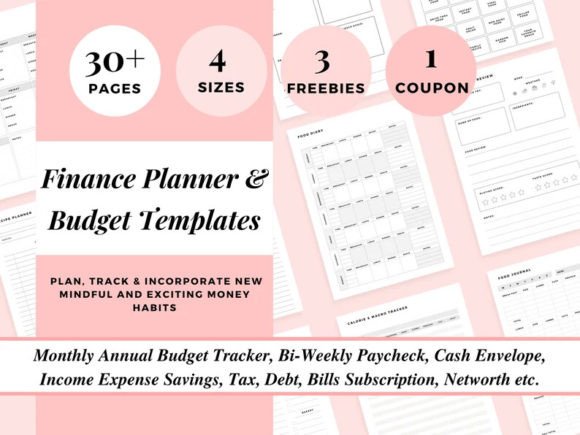
Many financial planners fail because they're either overly simplistic or overwhelmingly dense. They present a wall of numbers with no clear visual hierarchy, making it impossible to see the story your money is telling. This Financial Plan bundle takes a different approach. Imagine a clean, minimalist layout—think of a well-designed brand identity guide. Each page has a purpose, with ample white space that lets the most important information breathe. The typography is crisp and readable, using a clear sans-serif font for data entry and subtle serif accents for headings. The personality is calm, organized, and empowering. It’s a premium font for your finances, prioritizing function and aesthetic clarity over cluttered, "filler" pages.
This design-forward approach is its greatest strength. The visual style isn't just for looks; it directly influences usability. A well-structured debt log or income tracker within the bundle uses alignment and grouping to create a clear visual hierarchy. Your eye is naturally drawn to the totals, the remaining balances, and the progress you're making. This is modern typography principles applied to personal finance, where readability and recognition are paramount. When your financial documents are easy to scan and understand, you're more likely to engage with them consistently, building the better money habits that lead to real savings.
From Personal Savings to Business Cash Flow
The true versatility of a comprehensive Budget Templates Bundle is where it shines, much like a versatile typeface with multiple weights and styles. It’s a suite of design assets for your financial life. For the freelancer or small business owner, it becomes an essential tool for brand identity—not for a client, but for your own enterprise. Use the bi-weekly paycheck templates to manage personal cash flow, while the monthly business expense tracker helps you understand profitability. The tax bill tracker alone can save you from year-end panic, functioning as a precise log that makes quarterly estimates and annual filings straightforward.
Consider its application across different projects. A blogger can use the spending logs to track content creation costs against ad revenue. A graphic designer can use the income and expense sheets to monitor project-based cash flow, ensuring they're pricing services correctly. It’s the editorial design of your financial world—organizing raw data into a compelling, easy-to-read narrative. For personal use, the savings tracker acts as a motivational tool, visually mapping your journey toward a goal. It’s a commercial font for your bank account, bringing the same professionalism and strategic planning you apply to your client work to your own wealth-building.
Choosing Your Financial Toolkit: Practical Guidance
Selecting the right Financial Plan templates is akin to choosing a creative font for a major project. You must evaluate the fit. Does the bundle's style match your personal or brand aesthetic? If your business has a minimalist, modern brand identity, a financial planner with a clean, sans-serif look will feel cohesive. If you prefer a more traditional, authoritative feel, a bundle with serif elements might be more appropriate. The key is consistency across all touchpoints of your life and work.
Test the bundle like you would a font pairing. Does the layout of the income tracker complement the spending log? Is there a logical flow from one page to the next? Review the included styles: does it offer variations for bi-weekly and monthly pay periods? Are there dedicated sections for irregular income or variable expenses? Pay close attention to readability. Can you quickly jot down a number in a small cell? Are the category labels clear? Finally, consider the licensing of these design assets. Since you'll be using them repeatedly for personal and potentially commercial planning, ensure they are intended for ongoing use. This isn't a one-time packaging design element; it's the ongoing operational manual for your finances. By applying the same discerning eye you use for design projects, you'll find a system that not only organizes your money but actively helps you grow it.